How to Run Your Business Like a 10 Person Team

By Alan Martin
Solopreneur systems are the repeatable processes, automations, and AI powered workflows that let one person handle what a full team used to. They cover everything from client acquisition and delivery to content production and finance, turning ad-hoc scrambling into consistent, scalable output.
You already know you need systems.
This article skips the "why" because you're past that. You ran teams, managed operations, shipped real work for other people's companies. Now you're doing it solo. The question isn't whether to systematize, but which systems to build, in what order, and how AI changes what one person can realistically handle.
Most solopreneur advice is written for someone launching a side hustle from their kitchen table. That's not you. You're an experienced operator who left (or is leaving) a role where you managed processes, people, and budgets. The gap isn't knowledge. It's infrastructure. In 2026, AI has made it possible to automate operations that once required dedicated headcount.
But "use AI" is not a system.
A system has inputs, processes, outputs, and quality gates. This article builds the actual operating model.
The 7 Systems Every Solo Operation Needs
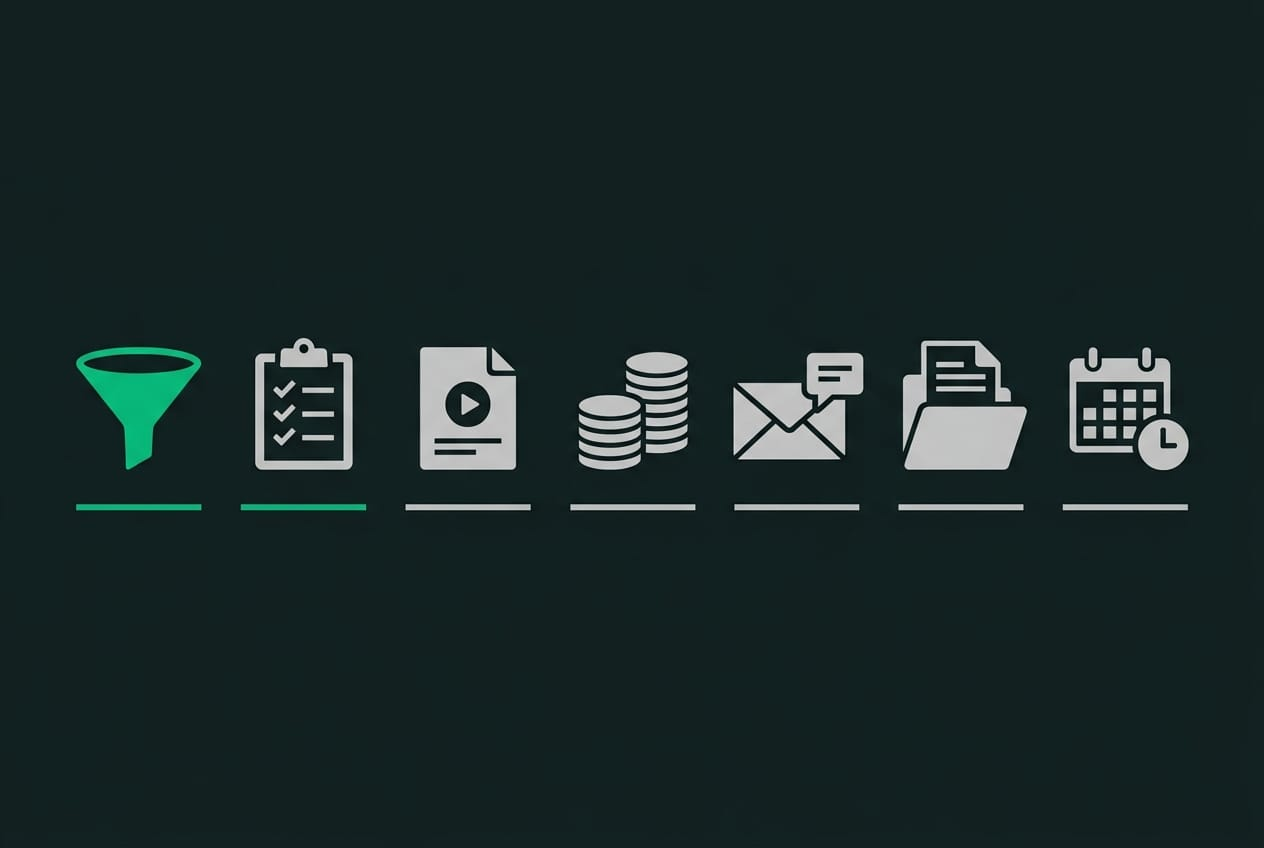
Every solo business runs on seven core systems. Not tools. Not apps. Systems: repeatable processes that take an input, run it through defined steps, and produce consistent output. The specific software changes every year. The categories don't.
1. Client acquisition system (lead generation and conversion). The full pipeline from "someone discovers you exist" to "they sign a contract." Without it, you're running on referrals and luck, which works until it stops working. And it usually stops at the worst possible time.
2. Client delivery system (onboarding through fulfillment). Everything that happens after someone pays you: onboarding, project management, deliverables, revisions, offboarding. Skip this and you'll reinvent your process for every single client. Inconsistent quality, twice the hours.
3. Content production system (creation to distribution). The engine that builds your audience and pipeline over time. Ideation, drafting, editing, publishing, distribution. Without a system here, content happens sporadically. Or not at all.
4. Financial system (invoicing, tracking, tax prep). If you can't send invoices, track expenses, and know your cash position at any given moment, you don't have a business. You have an expensive hobby.
5. Communication system (email, async protocols, CRM). How you manage client messages, prospect followups, and your own inbox. Without structure here, important emails disappear and you spend 90 minutes a day reacting instead of working.
6. Knowledge and documentation system (SOPs, reference docs, decision logs). Where you write down how things work. Every process, every login, every "how did I do this last time?" answer lives here. Without it, you're carrying your entire business in your head. That works until you get sick, take a week off, or just forget.
7. Personal operating system (time blocking, weekly review, energy management). How you manage yourself. There's no manager setting priorities, no all-hands forcing alignment, no HR policy telling you what your working ours are. This is the system that keeps the other six from collapsing under an unstructured week.
These seven cover every function a solo business actually has. You don't need all seven humming perfectly on day one. But you need the full map before you start building.
The System Maturity Model (Where You Are and Where You Need to Be)
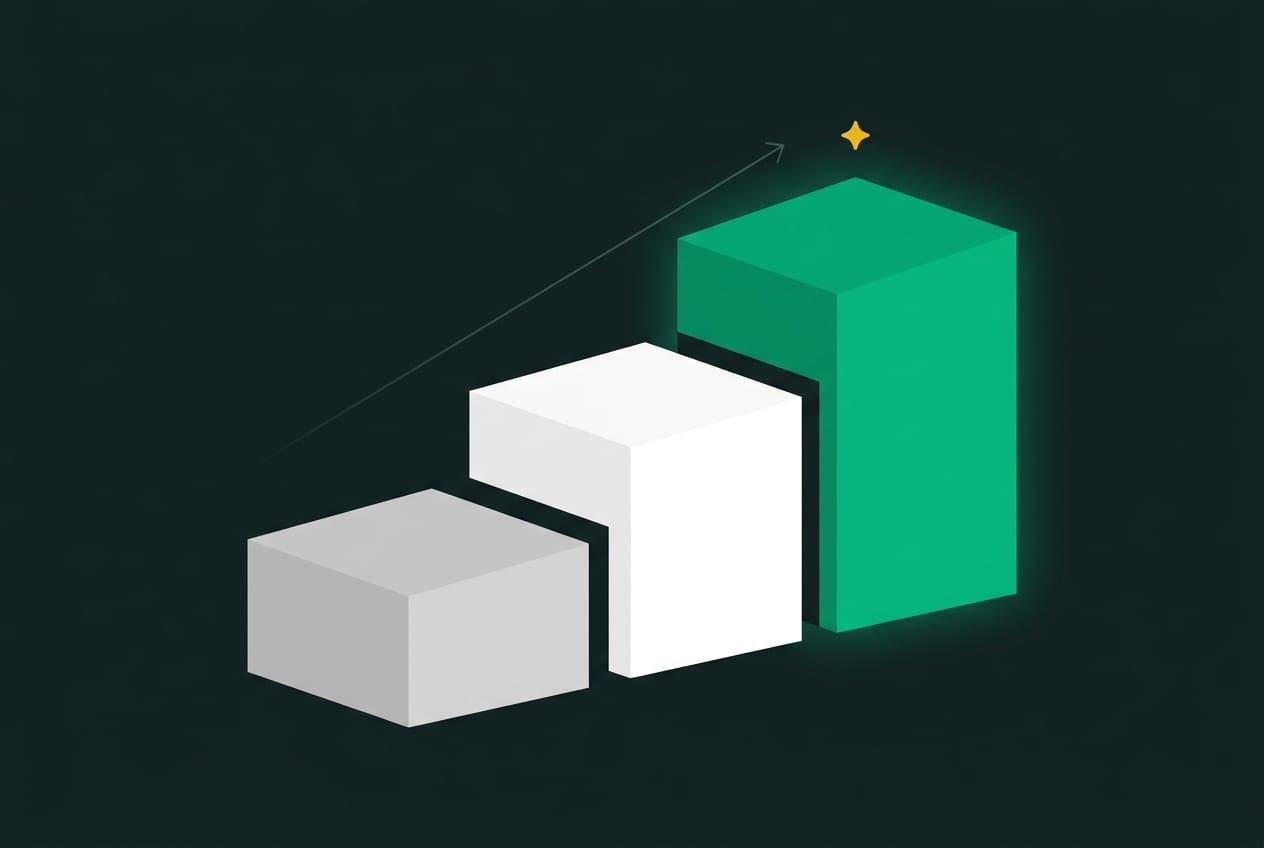
A checklist in a notebook and a fully automated workflow are both "systems," technically. They operate at completely different levels. Here's how maturity breaks down:
Stage 1: Ad hoc. You do it from memory, differently every time. Client onboarding? You wing it. Invoicing? When you remember. Content? Whenever inspiration strikes. Most solopreneurs are at Stage 1 in probably five of seven systems. No shame in that. It's the starting point.
Stage 2: Documented. A written process exists. You follow steps. Still manual execution, but now it's consistent. A Google Doc that says "when a new client signs, do steps 1 through 8" is enough to cut errors and time by 30-40%.
Stage 3: Automated. Triggers, templates, and workflows handle the repetitive parts. Client pays an invoice, onboarding email sends automatically. You publish a post, social distribution fires on its own. You handle exceptions. The system handles the routine.
Stage 4: AI augmented. AI handles execution; you handle judgment and edge cases. First draft of your content is AI generated and you edit for voice. Inbox gets triaged by AI and you only see what actually needs a human. Client reports get auto-drafted from project data and you review before sending.
Stage 4 everywhere is aspirational even now, in 2026. The real goal is Stage 3 minimum for the systems eating the most time. If you're spending 8 hours a week on something that could be Stage 3, that's your next build.
Quick gut-check: run through those seven systems and tag each one honestly. Most solo operators find they're Stage 1 in five or more categories. Good. That's clarity. It tells you exactly where to start.
Build Order (Which Systems to Set Up First)
The most common advice is "start with whatever annoys you most." That's bad advice. Annoyance is a feeling, not a business metric.
Build order should follow revenue impact and time savings, in this sequence:
1. Financial system first. Can't invoice reliably? Don't know your cash position? Nothing else matters. Set up QuickBooks, Wave, or FreshBooks. Connect your bank. Create invoice templates. Two to three hours up front, immediate payoff. If you can't tell someone your exact revenue and expenses for the month in under 60 seconds, the financial system isn't working yet.
2. Client delivery system second. This is your reputation. Inconsistent delivery kills referrals faster than anything else. Document your process end to end: what happens after someone pays, what they receive, when, and how. Build templates for every recurring deliverable. Set up automated client onboarding so no step gets skipped. When a new client's first two weeks feel identical to the last client's first two weeks, you're there.
3. Client acquisition system third. Only after you can deliver consistently. There's no point generating leads you can't serve well. Map the pipeline: how prospects find you, what they see, how they convert. Could be as simple as a personal site, a clear service page, and a booking link. Could be a full outbound system with email sequences and CRM tracking. Match the complexity to where you actually are in revenue. You know it's working when you can point to the specific activities that generated your last three clients.
4. Content production system fourth. The long game. Content compounds, but only when it's consistent. Build the AI assisted content workflow after the first three systems are solid. Content that creates demand you can't fulfill just makes a mess. A predictable publishing cadence that doesn't eat your whole week is the signal it's working.
5. Communication, knowledge, and personal systems. These weave in as you build the others. Start capturing SOPs while you document delivery. Set up email filters while you're managing client comms. Build your weekly review as you find your rhythm. They emerge from building the first four deliberately, not from a separate setup project.
AI as Your Operating Team
Here's where 2026 actually changes things. AI isn't a tool category. It's a staffing model. Think of it as the org chart of a one-person business, each role handled by AI while you act as the manager who sets direction, reviews output, and handles exceptions.
AI as writer. First-draft content, email copy, social posts, client facing docs. AI kills the blank page problem and produces 80% drafts in minutes. You edit for voice, accuracy, nuance, and anything that requires knowing what actually happened on Tuesday's call. That context is yours. AI brings the speed. Expect 35-50% time savings on content work.
AI as analyst. Research synthesis, competitive monitoring, data summarization, trend spotting. Feed it a pile of information and get structured analysis back. You make the strategic call. Where AI falls short is that it doesn't have market intuition or relationship context. It summarizes patterns in existing data. That covers the 80% that's information processing. The 20% that's judgment still needs you.
AI as admin. Invoicing reminders, scheduling, email triage, CRM updates, meeting prep, follow up tracking. This is the mundane operational work that eats 40% of some solopreneurs' weeks. AI handles the routine. Anything requiring relationship sensitivity or business judgment still needs you. AI can draft the follow up email. You decide whether to send it.
AI as designer. Social graphics, slide decks, basic visual assets, presentation materials. AI generates options; you select and refine. Brand guidelines have to come from you. For operational assets, AI design is good enough. For brand-defining creative work, it's a starting point.
AI as developer. Automation building, form creation, app prototyping and creation, workflow connections. AI can build Make flows from natural language descriptions, create custom dashboards, build a client portal, even build out complex integrations. You define the requirements and test the output. Tools like Claude Code, Codex, and Cursor increasingly eliminate the need for real development expertise, if you're technical enough.
AI as project manager. Task tracking, deadline reminders, progress summaries, meeting agendas, status updates. AI keeps the operational rhythm running while you drive priorities. Worth knowing: AI tracks what you tell it. It won't proactively flag the strategic priority you've been avoiding.
The cost of this entire AI "team"? Under $200/month for a functional suite. A single part time VA runs $1,500-$2,500/month. A full-time employee is $4,000-$6,000/month before benefits.
The Weekly Operating Rhythm
Systems without a schedule are just documents nobody reads. Here's what a systems driven week actually looks like for a solo operator billing $10K-$15K/month in productized services. Not aspirational. Operational:
Monday: Client delivery sprint. Four to five hours of focused execution. Highest-energy day goes to the work that actually generates revenue. No meetings, no admin, no "just checking in" emails.
Tuesday: Content production block. AI assisted drafting, editing, scheduling, and distribution, all batched. AI generates first drafts. You edit, approve, and queue. The goal is the full week's content in one block. Three to four hours.
Wednesday: Sales and pipeline. Outreach, proposals, discovery calls, follow ups. Cap it at three hours. If sales consistently takes longer than that, your acquisition system needs work. You're doing too much manually.
Thursday: Client delivery sprint #2. Back to the revenue-generating work. Same as Monday.
Friday AM: Admin and finance. Invoicing, bookkeeping review, expense categorization, tax prep tasks. One to two hours. Financial admin that used to eat 3 hours per day (per Accountancy Age) gets compressed because your financial system handles the routine before you ever touch it.
Friday PM: Systems improvement. This is the "working on the business" block. Pick one system. Review it. Make it better. Move it one stage up the maturity model. Document what changed. One to two hours. Skip this block consistently and your operations stagnate while you wonder why things keep feeling hard.
Weekend: Off.
A system that requires weekend work is a broken system.
The math shakes out to 20-25 hours of actual work per week: 80% to delivery and sales (revenue engine), 20% to content, admin, and systems improvement (growth engine).
The objection forming in your head is probably "my business is different." Maybe. Client work might dominate Monday through Wednesday. Content might move to Thursday. But the rhythm itself doesn't change: protect delivery time, batch similar tasks, keep dedicated time for systems improvement.

Systems That Scale Revenue
The direct connection between system maturity and revenue capacity is the part nobody seems to want to talk about concretely. Here's what changes as systems mature:
Without systems, a solo operator typically caps at 3-4 clients and $5K-$8K/month. Every client interaction is custom. Every deliverable built from scratch. Every invoice a manual task.
Stage 2 (documented): 5-6 clients, $8K-$12K/month. You stop reinventing delivery for each engagement. Templates, checklists, and documented processes cut delivery time by 25-30%.
Stage 3 (automated): 6-8 clients, $12K-$18K/month. Onboarding, invoicing, content scheduling, and routine communication run themselves. You focus on high judgment work.
Stage 4 (AI-augmented): 8-10 clients, or reduce to 20 hours a week at the same revenue. AI drafts content, triages communication, generates reports, handles research. You manage output quality rather than doing the underlying work.
There's a profit margin story here too. No employees, no office, minimal SaaS costs. Well run solo operations can hit 70-85% margins compared to 10-20% for businesses with employees. At $15K/month with 75% margins, you're netting $135K/year working 25 hours a week. That's the math that makes this worth building.
Honest caveat: most solo operators land in Stage 2-3 across most systems, and that's actually a strong outcome.
Stage 4 across all seven is aspirational. AI is good enough to augment most business processes right now. It can even fully automate some of them.
The full one-person business guide covers the detailed revenue tier breakdown, including which business models actually work at each stage.
The Three Mistakes That Kill Solo Systems
Most systems fail not because the operator didn't try, but because they tried the wrong thing at the wrong time.
1. Building systems before you have clients. Systems optimize existing work. Zero clients means nothing to systematize. The solopreneur who spends three months building a perfect Notion dashboard and automated email sequences before landing a single paying client has built a very organized business that makes zero dollars. Revenue first. Systematize what's working second.
Red flag: you've spent more than $200/month on tools and more than 20 hours on "setup" but haven't invoiced anyone yet.
2. Over-engineering Stage 1. This is the 47-step Notion dashboard with linked databases, automated rollups, and color-coded priority flags, built before a single SOP has been written. Start with a Google Doc. Write down what you do, step by step. Use that document for 30 days. Then, when the process is proven and you actually know what you need, graduate to better tooling.
Red flag: you've rebuilt your project management setup more than twice without finishing a single client project inside it.
3. Automating bad processes. If your client onboarding is confusing, automating it just makes the confusion arrive faster. If your content workflow produces mediocre output by hand, AI-powered content production produces mediocre output at scale. Fix the process first. Validate it works manually at Stage 2, then automate at Stage 3, then layer in AI at Stage 4. Skipping stages creates expensive, fast-moving chaos.
Red flag: you automated something and the error rate went up.
Start With One System
The person who tries to build all seven systems this week will build zero. Pick the one that's costing you the most time or money right now. Document it. Automate one step. Review it next Friday during your systems improvement block. That's the whole practice.
Systems aren't a project with a completion date. They're a habit. A weekly practice of looking at how your business operates and making one thing slightly better. Over 90 days, that habit changes the operating reality of the entire business. It doesn't feel dramatic in the moment. It compounds anyway.
One system. One improvement. Every Friday. Start there.